
HABL: Communities of Practice
HABL for Accelerated Learning: Designing for Depth, Retention, and Transfer in a Compressed Semester
Final Compilation
Final Article:
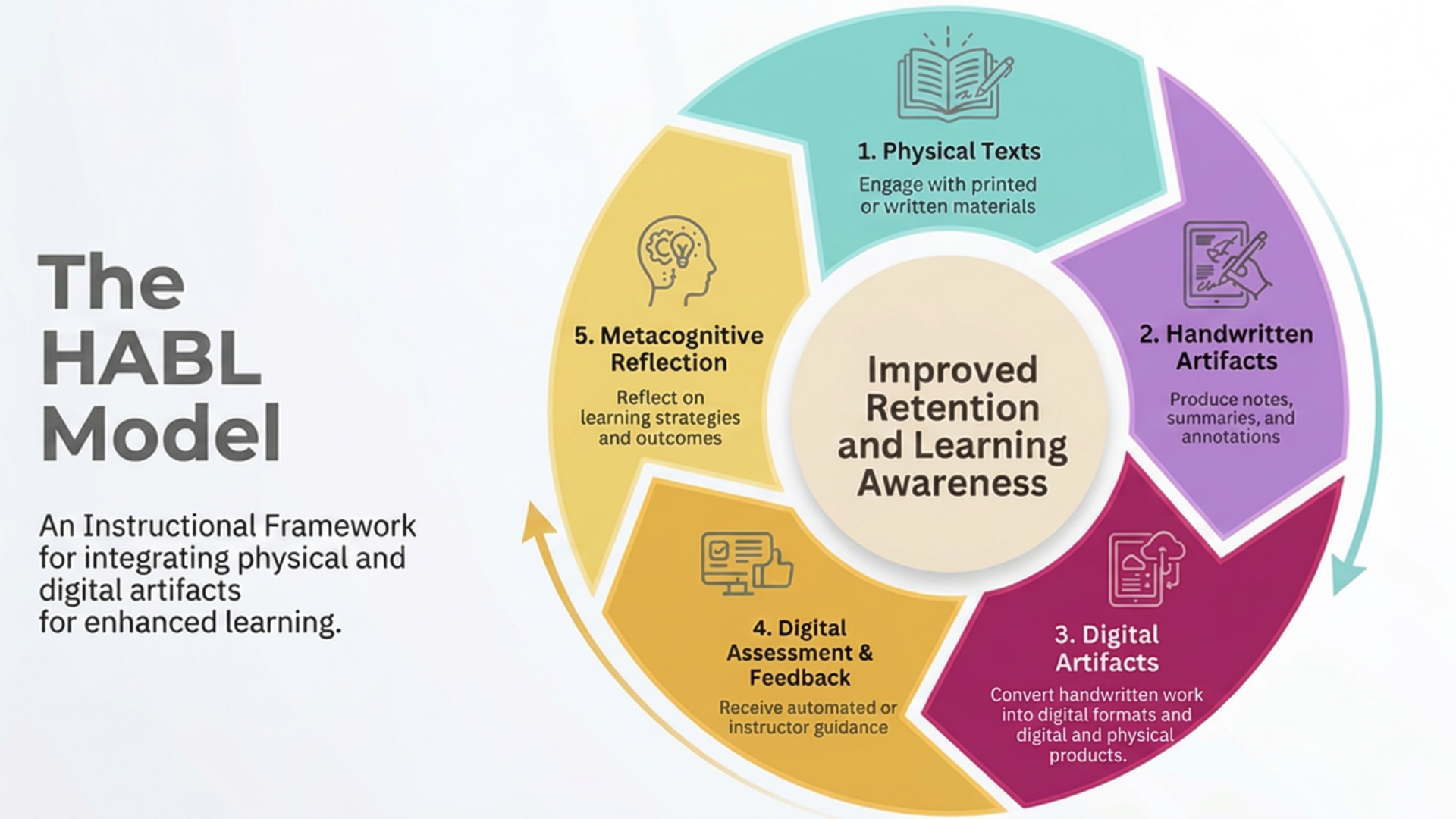
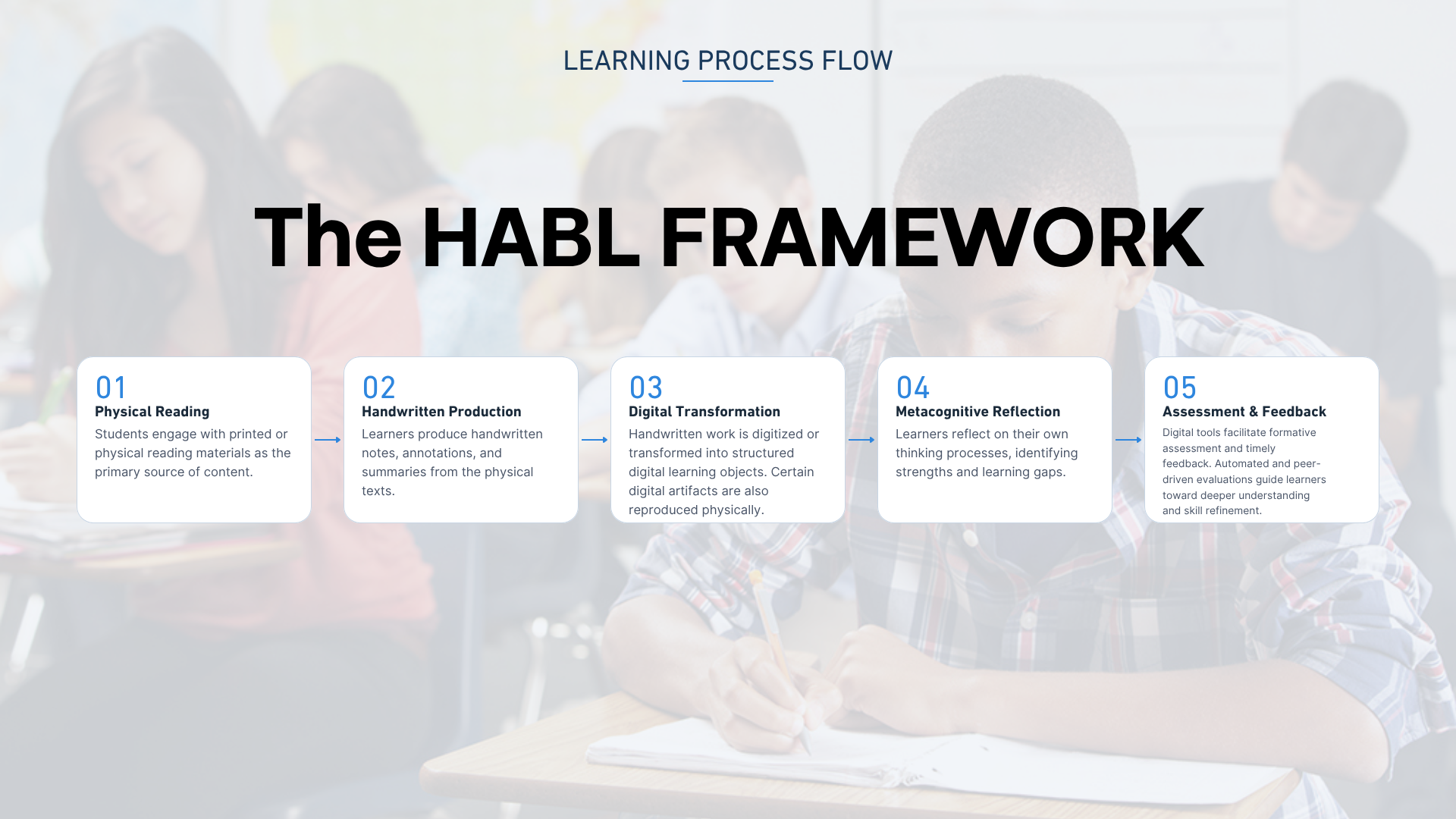
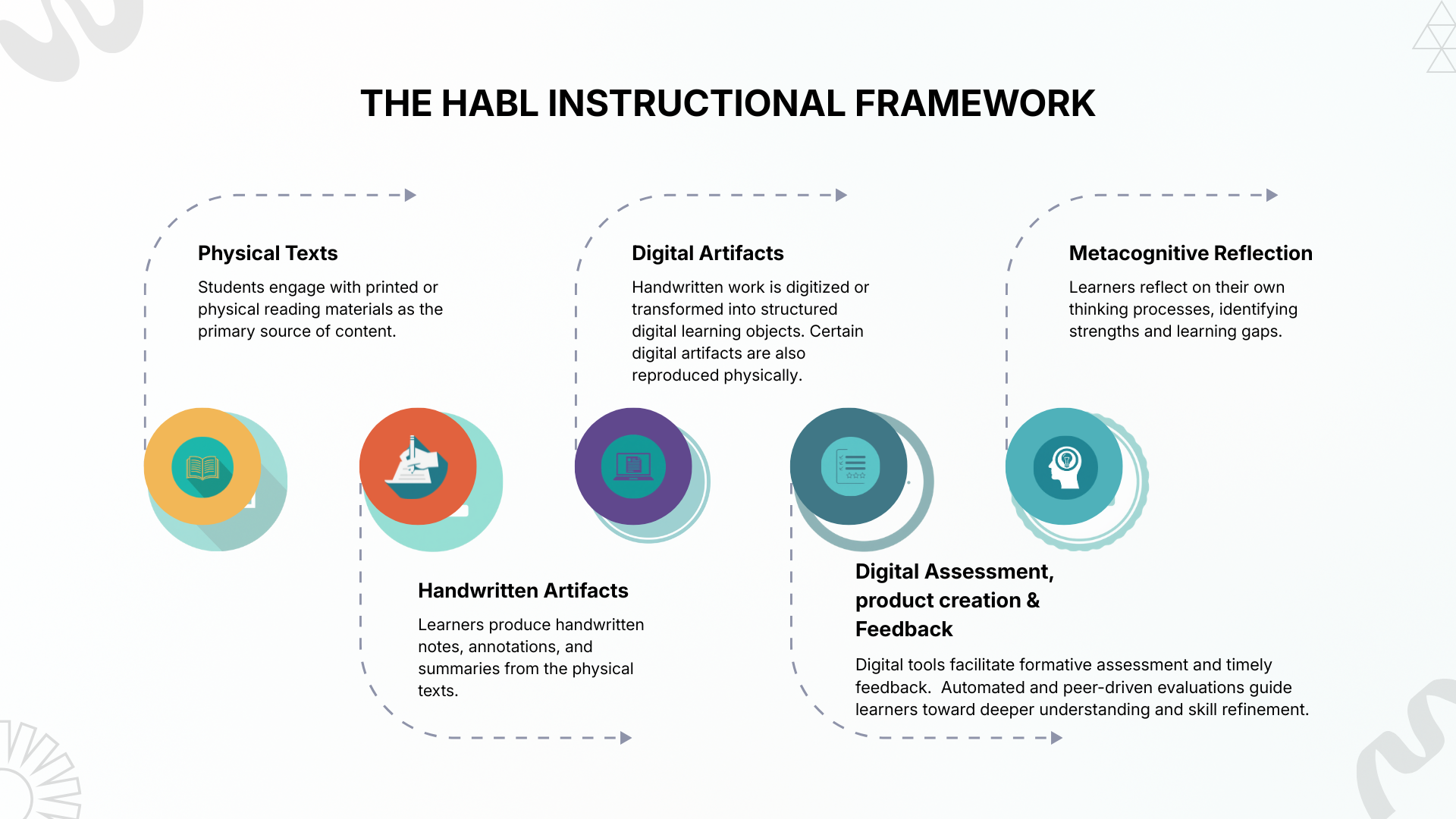
The HABL framework conceptualizes learning as a cyclical process rather than a linear sequence of instruction and assessment. HABL proposes four cognitive mechanisms, Encoding, Externalization, Iteration, and Reflection, which interact to produce retention, transfer, and metacognitive awareness. To deliver these benefits to students, the learning cycle is split into five phases: Physical Input, Physical Encoding, Digital Artifact Development, Digital Assessment, and Metacognition.
Assignment 1: Publication Outline
Hybrid Artifact-Based Learning, a technology-integrated instructional method designed to support retention and metacognitive awareness, is a better choice because it is grounded in the premise that physical texts, handwritten learning artifacts, digital artifacts, and digital assessments each contribute unique cognitive benefits that can be integrated into a unified instructional model.
HABL: Artifacts in Action
Welcome to the Premiere of the Official HABL Introduction Video!
Rough Draft: Beyond Paper Versus Screen: Using Physical and Digital Artifacts to Improve Learning
This is the rough draft of my article for EDLD 5315.