Final Article:
Beyond Paper Versus Screen: Using Physical and Digital Artifacts to Improve Learning
Melvin Harris
Lead Media Teacher, Galena Park ISD
M.Ed candidate, Lamar University
Introduction
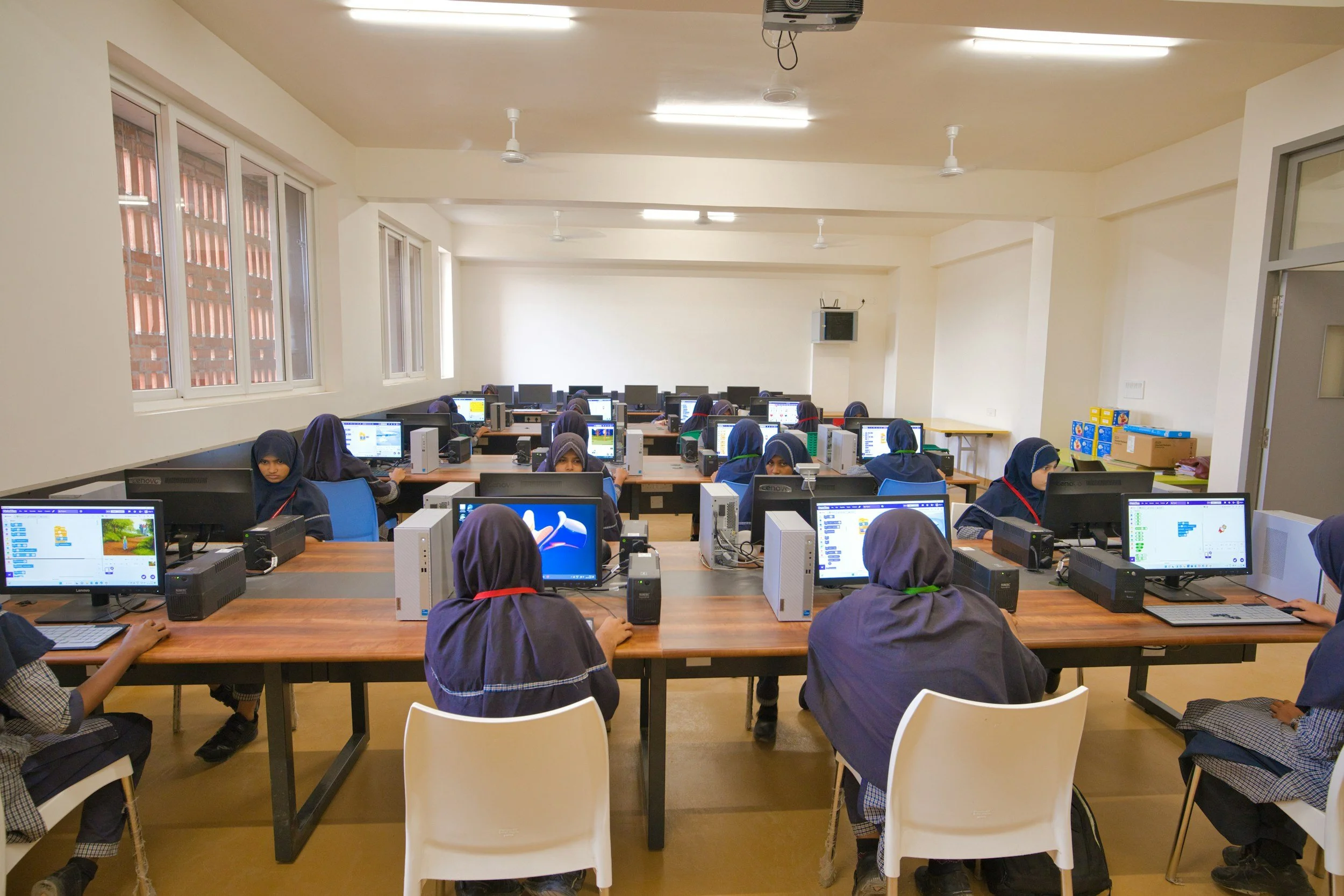
Imagine, if you will, a welding student annotating a printed blueprint they made in AutoCAD before beginning to weld the product. In the next classroom, an AV production student sketches a storyboard from an annotated, fully broken down, and lined “printed-on-paper” screenplay using Storyboarder by Wonder Unit, free and open-source software, before producing their video. Across the hall, an English student annotates an excerpt from a novel before creating an AI podcast in which the characters talk about the story, as if it were scenes from a movie they both starred in. In a Geometry classroom, students create triangles using Side-Angle-Side or Angle-Side-Angle problems and, in collaboration with the Engineering Class, model and slice their triangles to 3-D print their solutions, bringing them to life in the real world. Although these activities appear different, they share an important characteristic: each requires students to create physical and digital artifacts while seamlessly integrating with classroom content in both traditional and digital learning environments.
We have all watched as the post-COVID world of education has fundamentally transformed students' learning experiences in secondary and postsecondary classrooms. Yet, this transformation has been a long time coming. One-to-one technology initiatives, cloud-based collaboration tools, digital assessments at the state and national levels, learning management systems, and AI (artificial intelligence) applications have long altered how students access information, communicate ideas, and attempt to demonstrate understanding.
Unfortunately, in conversations that question the effectiveness of digital learning environments and their impact on student outcomes, engagement, and knowledge retention, instructional practice is often framed as a binary choice between traditional and digital approaches. Educators who have been frantically searching for answers, or even clarity, frequently encounter debates about handwritten versus typed notes, physical versus digital texts, and paper-based versus online assessments.
Hybrid Artifact-Based Learning, a technology-integrated instructional method designed to support retention and metacognitive awareness, is a better choice because it is grounded in the premise that physical texts, handwritten learning artifacts, digital artifacts, and digital assessments each contribute unique cognitive benefits that can be integrated into a unified instructional model. Rather than viewing physical and digital learning experiences as competing at best, and dysfunctional at worst, this framework positions them as interconnected components of an artifact-based ecosystem that supports encoding, observable thinking, reflection, and knowledge transfer.
What The Research Says:

Why Students Forget:
Understanding the underlying mechanisms of learning and forgetting provides a strong foundation for the HABL Framework. Research on learning and memory suggests that students retain information more effectively when they process it themselves. They must organize, retrieve, and apply what they learn in a visceral and practical manner. Unfortunately, students in many classrooms complete the digital assignments they receive without developing a lasting understanding. There have been many times when teachers have worked tirelessly on a lesson plan, created a sound digital assignment and a relevant assessment, and executed it perfectly, only for the key concepts to be reviewed and the entire class to reply to any question asked with the proverbial “huh?” Then comes the review, and the “oh, yeah,” then you come back to it to connect it with another skill, and they reply, “You didn’t teach us that.”
Generative learning theory helps explain this infuriating phenomenon and provides an important foundation for using a Hybrid Artifacts-Based approach. Fiorella and Mayer (2015), in their book Learning as a Generative Activity: Eight Learning Strategies that Promote Understanding, explain that students learn more deeply when they generate meaning through activities such as summarizing, mapping, drawing, explaining, and note-making. They must make sense of the material that is given to them. This is accomplished through three cognitive processes, selecting, organizing, and integrating, which move presented information from the sensory memory of just experiencing it with eyes and ears, to working memory, which comes from active attention, recognition, and organization in a coherent cognitive structure, to long-term memory, which involves connecting the other processes and structures with each other and prior knowledge stored there (Fiorella and Mayer, 2015). This idea is paramount to using this approach, as creating artifacts requires students to transform the information presented rather than engage in rote memorization. It moves disparate physical and digital products from assignments to be graded to activities that enhance a learner's cognitive processes during learning, and helps move information from mere attendance to encoding. When students do not engage in the three cognitive processes indicative of generative learning, there is no engagement of the structures needed to encode the information into their long-term memory, and they forget. Students remember more when they actively process information rather than passively receive it.
Retention is the Door, Encoding is the Key:

Fiorella and Mayer (2015) state that, “Retention is the ability to recall or recognize what was presented. Transfer is the ability to apply what was learned to solve new problems. If we want to open the world of understanding and problem-solving to our students, we must employ strategies that help them retain what they learn. The key to this is employing one of the core mechanisms of the HABL approach: Encoding.
According to Brunsman and McEntarffer (2023), encoding consists of the cognitive processes that occur during learning and influence what information is ultimately stored in long-term memory. In a seminal work on cognitive psychology and memory, Craik and Lockhart (1972) argued that retention depended on aspects of study time, amount of material presented, and modality of assessment, as well as the familiarity, compatibility, and meaningfulness of the material. They also state that retention is a function of depth. Information that is processed deeply through meaningful engagement (deep semantic processing vs. shallow structural processing, i.e., the meaning of words vs. the words themselves or their sounds), organization, rehearsal, and elaboration is more likely to be retained than information processed at a superficial level (Craik & Lockhart, 1972). Some 30 years later, Craik (2002) revisited his work and stated that remembering reflected the qualitative types of analysis performed during the initial encoding processes of perception and comprehension, and that deeper processing was associated with higher levels of subsequent remembering. This makes the case for student Metacognition, which Tezer (2024) defines as skills of being aware of one’s own learning and memory capacity, knowing the qualities of the learning strategy to be used, planning for the study to be done, using effective learning strategies, and monitoring and evaluating the learning situation. It is thinking about thinking and learning about learning. When a teacher creates a learning environment that gives students the opportunity to explore deeper meaning and foster personal engagement, metacognition can occur, and the likelihood of encoding and retaining information increases. HABL builds both encoding and metacognition into the simple process of making products for class.
Physical and Digital Artifacts as Halves of a Whole:
In this framework, strategies for encoding information should come from physical artifacts. Annotation, handwritten Cornell or 3R note-making, Sketching, Concept Mapping (for secondary students), and journaling are all exceptional ways for students to select, organize, and process information more deeply. Research has found that when strategies involving note-taking, hand-written note-making, and embodied cognition were used, students performed better on assessments and retained the information longer than students who did not engage in these strategies or simply used a device to work. Mueller and Oppenheimer (2014) found that longhand notes may have superior external storage as well as superior encoding functions, despite the fact that the quantity of notes was a strong positive predictor of performance. They also noted that laptop note-takers tended to take verbatim notes, whereas longhand note-takers tended to engage in more processing by selecting what was important, allowing for more concise and studyable notes (Mueller and Oppenheimer, 2014). Finally, in line with the generative learning theory, they found that, “synthesizing and summarizing content, rather than verbatim transcription, can serve as a desirable difficulty for improved educational outcomes (Mueller and Oppenheimer, 2014; Diemand-Yauman, Oppenheimer, & Vaughan, 2011; Richland, Bjork, Finley, & Linn, 2005).”
This is not to say that the physical component should replace the digital classroom completely. According to numerous studies, there is little doubt that technology integration can improve academic achievement, student engagement, collaboration, and learning when and if it is aligned with instructional practices that leverage technology as more than a convenience or a replacement for sound teaching. The HABL framework is most closely related to the TPACK (Technological Pedagogical Content Knowledge) framework. According to Koehler et al. (2013), “the TPACK framework describes the kinds of knowledge that teachers need in order to teach with technology, and the complex ways in which these bodies of knowledge interact with one another.” They go on to say that teaching is a context-bound activity and that teachers with developed TPACK use technology to design learning experiences tailored to specific pedagogies, content, and learning contexts (Koehler et al., 2013). This is a strong rationale for the specific place technology has in a classroom and supports its use, but this framework is concerned with the teacher’s content and technological knowledge, as well as their knowledge of how to actually teach concepts to students. HABL is a student-centered approach concerned with the processes and mechanisms that happen when learning happens and when information is retained, recalled, and built upon. Put simply, TPACK concerns itself with teachers' planning and decision-making in technology-assisted lesson design, while HABL is a learning-process framework. HABL seeks to integrate content and context to the pedagogical needs of the classroom and, through careful technology integration and artifact creation, create opportunities for students to participate in an authentic and meaningful way, fostering a greater connection to concepts and a deeper level of engagement rather than surface-level comprehension.
Therefore, it is important that technology is properly incorporated rather than merely included. Since HABL is concerned with the creation of artifacts, educational technology is leveraged to create content and products that build upon and bolster the physical component. The creation of these artifacts supports generative learning and supports encoding.
The HABL Learning Cycle:
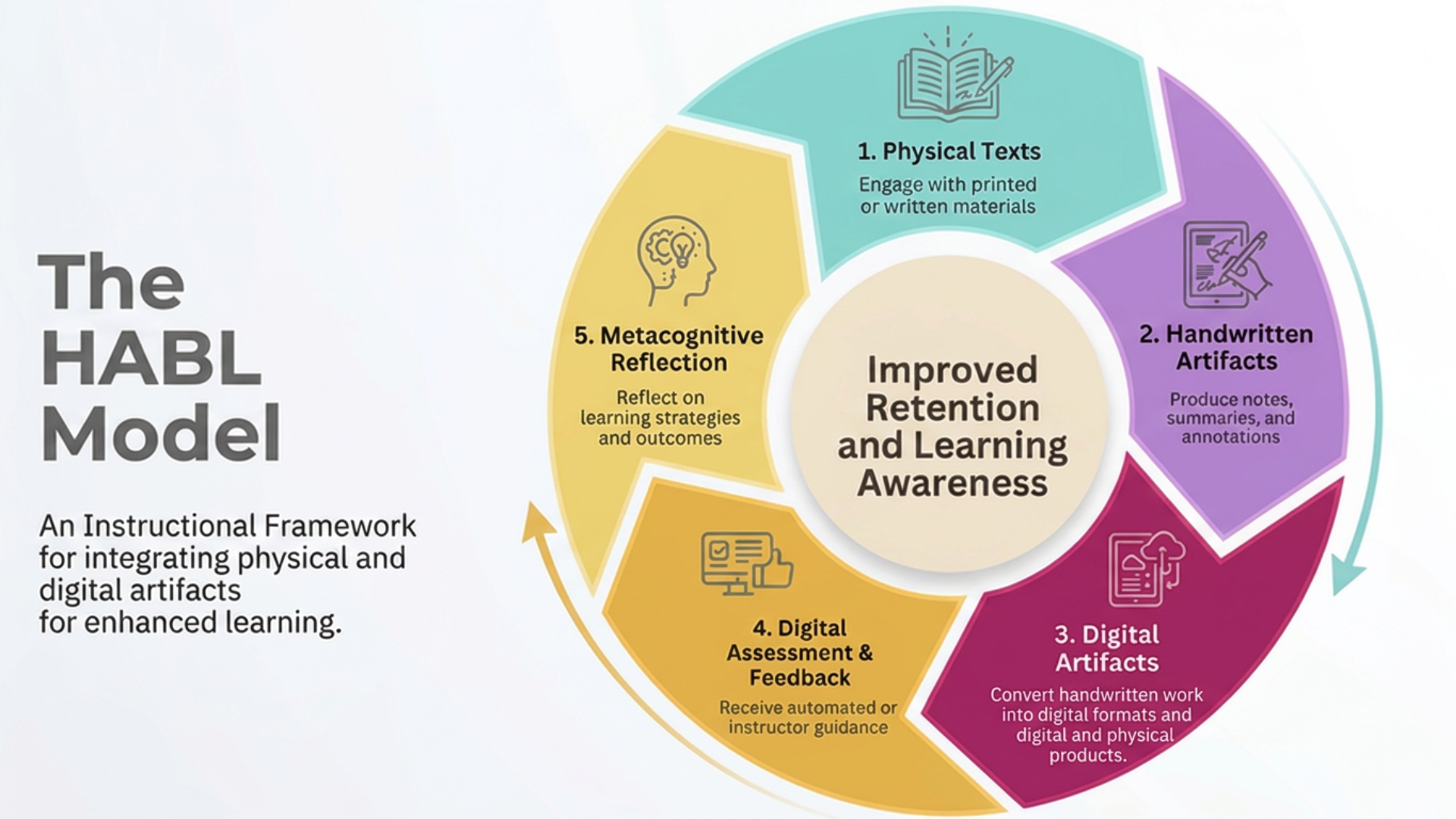
HABL Figure 1.1- Created with Canva
As we investigate the HABL framework, it helps to conceptualize learning as a cyclical process rather than a linear sequence of instruction and assessment, focused solely on either digital or physical work performed in preparation for a standardized test. This allows teachers to fully integrate practice into pedagogy. It also requires teachers to know their content and the tech that best relates to the concepts taught. Koehler and Mishra (2008) say that the specific technologies are best suited for addressing subject-matter learning, and how the content drives or perhaps even changes the technology, or vice versa, must be understood.
A defining characteristic of HABL is its view of learning as an artifact ecosystem. Rather than treating individual assignments as isolated daily independent work, the framework emphasizes connections among artifacts created throughout the learning process. As a result, the educational technology used must align with whatever is used to produce the artifacts. This takes the guesswork out of designing instruction with technology integration in mind. Each artifact naturally leads to the next, and learning becomes a process of building, connecting, revising, and reflecting rather than simply completing and autograding assignments. It also fosters ownership not only of the learning process but also of the resulting creations.
The Phases of the Model are best described as:
Phase 1: Physical Input
First, learning begins with engagement with meaningful content. Students encounter information through texts, examples, demonstrations, manuals, or authentic professional resources.
Phase 2: Physical Encoding
Second, learners engage in generative learning and create physical artifacts that support encoding and knowledge construction. These artifacts foster embodied thinking and encourage active processing and meaningful engagement.
Phase 3: Digital Artifact Development
Third, students develop digital artifacts that support application, collaboration, communication, and revision. If necessary, these digital artifacts can be reproduced in physical form so that students can interact with them and deepen their engagement with the content.
Phase 4: Digital Assessment and Feedback
Fourth, feedback mechanisms provide opportunities for retrieval, evaluation, and improvement, as well as for teachers to grade and assess, to gather data and pivot, spiral, and scaffold lessons. This is paramount to proper instructional design and building a TPACK-type base for teaching.
Phase 5: Metacognitive Reflection
Finally, reflection activities encourage learners to examine both products and processes, strengthening their metacognitive awareness and actively engaging them in their learning. This is extremely important because this is the final step to creating meaningful connections to teaching, learning, and creation.
Because we are looking at HABL as an ecosystem rather than a traditional instructional model or a blended learning approach, instructional technology’s primary focus is on content delivery. At the same time, encoding occurs in significant ways during the physical artifact creation phase.
Applications Across Disciplines
Although the Hybrid Artifact-Based Learning (HABL) model is grounded in research on cognition, metacognition, and educational technology, its practicality lies in its ability to be applied across any number of learning environments.
While the specific artifacts can differ across classes, the underlying learning cycle remains constant. Students engage with specific content, lesson objectives, knowledge, and skills; create physical artifacts that support encoding and knowledge construction; begin metacognition; develop artifacts that support application and revision; receive teacher and peer feedback; and engage in reflection.
This is effective for independent work but also fosters whole-class collaboration, even during seemingly single-student, “keep your eyes on your own work” tasks. During whole-class simultaneous independent work, students engage in meaningful tasks, handwritten note-making, annotation of print texts, and the physical creation of artifacts while also leveraging digital tools, which enables teachers to give targeted feedback and monitor progress and application of knowledge in real-time, which directly reflects the TPACK framework found in Integrating educational technology into teaching: Transforming learning across disciplines (Hughes and Roblyer, 2022). These common features reinforce the idea that HABL is a flexible framework for organizing learning around artifact creation, refinement, and reflection, independent of task modality, whether group or independent.
Now, let’s take a look at how HABL works in various classrooms so teachers can quickly and effectively implement the framework.
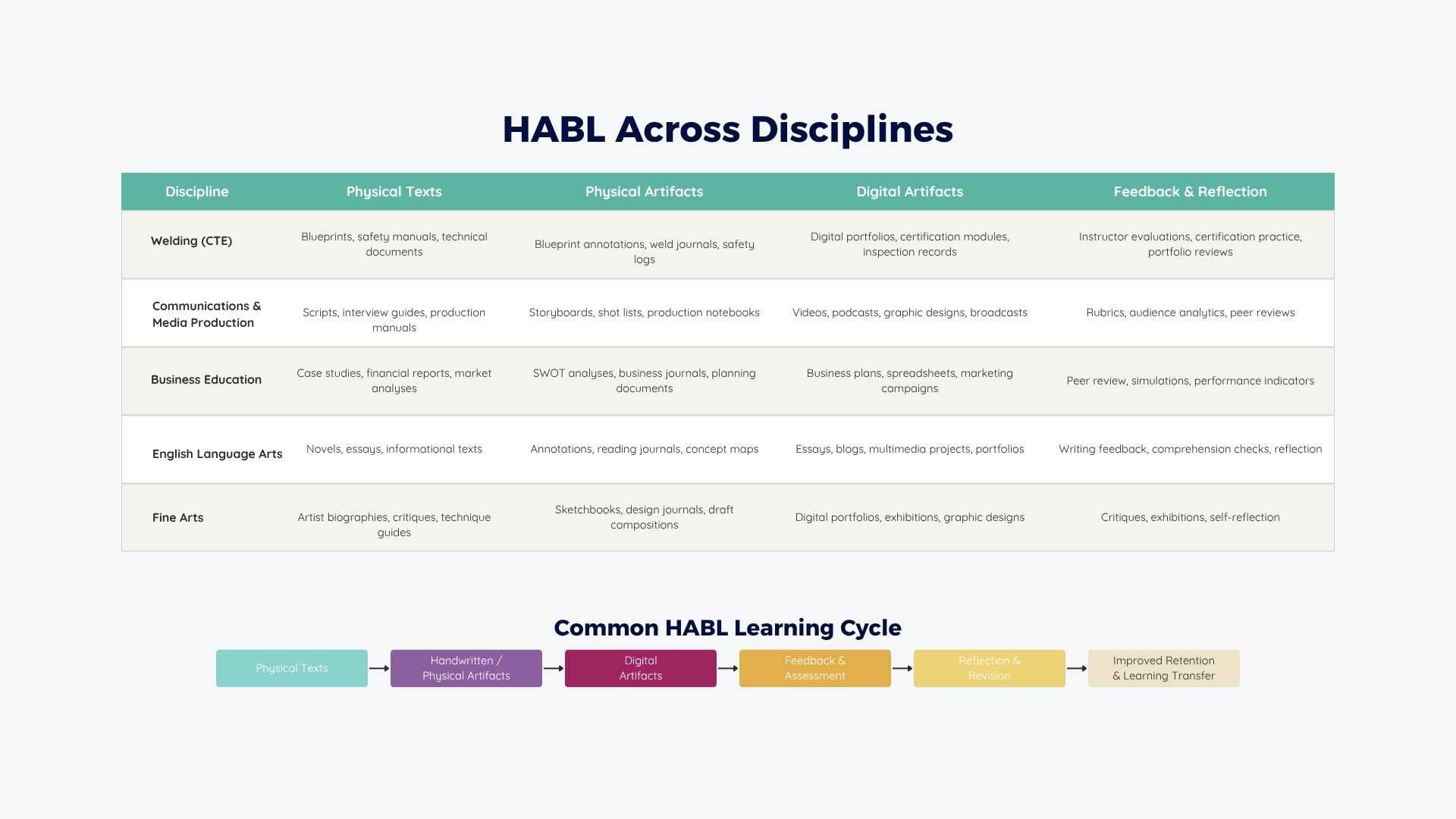
Figure 1.2- Created with Canva
Career and Technical Education

Welding
As seen in Figure 1.2, these artifacts support encoding by requiring learners to identify critical information and document procedural thinking. This translates directly into physical artifact creation, in which the student actually performs the various welds and builds the product from a blueprint, such as trailers, barbecue pits, and other structures, depending on materials and time. This extends beyond the acquisition of technical skills, as students engage in repeated cycles of documentation, reflection, and refinement that support both retention and metacognitive awareness.
Communications and Media Production
In this example, the technology serves as more than a production tool; it is a platform for content production, editing, revision, collaboration, and audience engagement. Students can then reflect on production, peer responses, and storytelling effectiveness through this process, and they repeatedly connect planning, production, and assessment artifacts within a unified HABL cycle.
Business Education
In the CTE Business classroom, feedback is generated through instructor review, peer evaluation, simulation outcomes, or business performance indicators and real-world metrics. Reflection activities will encourage students to evaluate their decision-making processes, assumptions, and outcomes. It also bolsters the use of software necessary to succeed on various certification exams to earn CCMR credit. As a result, artifacts that students create become tools for both business analysis and metacognition, as well as practice for practical assessments and exemplars for mastering professional standards.
The Core Classes: Math, English, Science, Social Studies
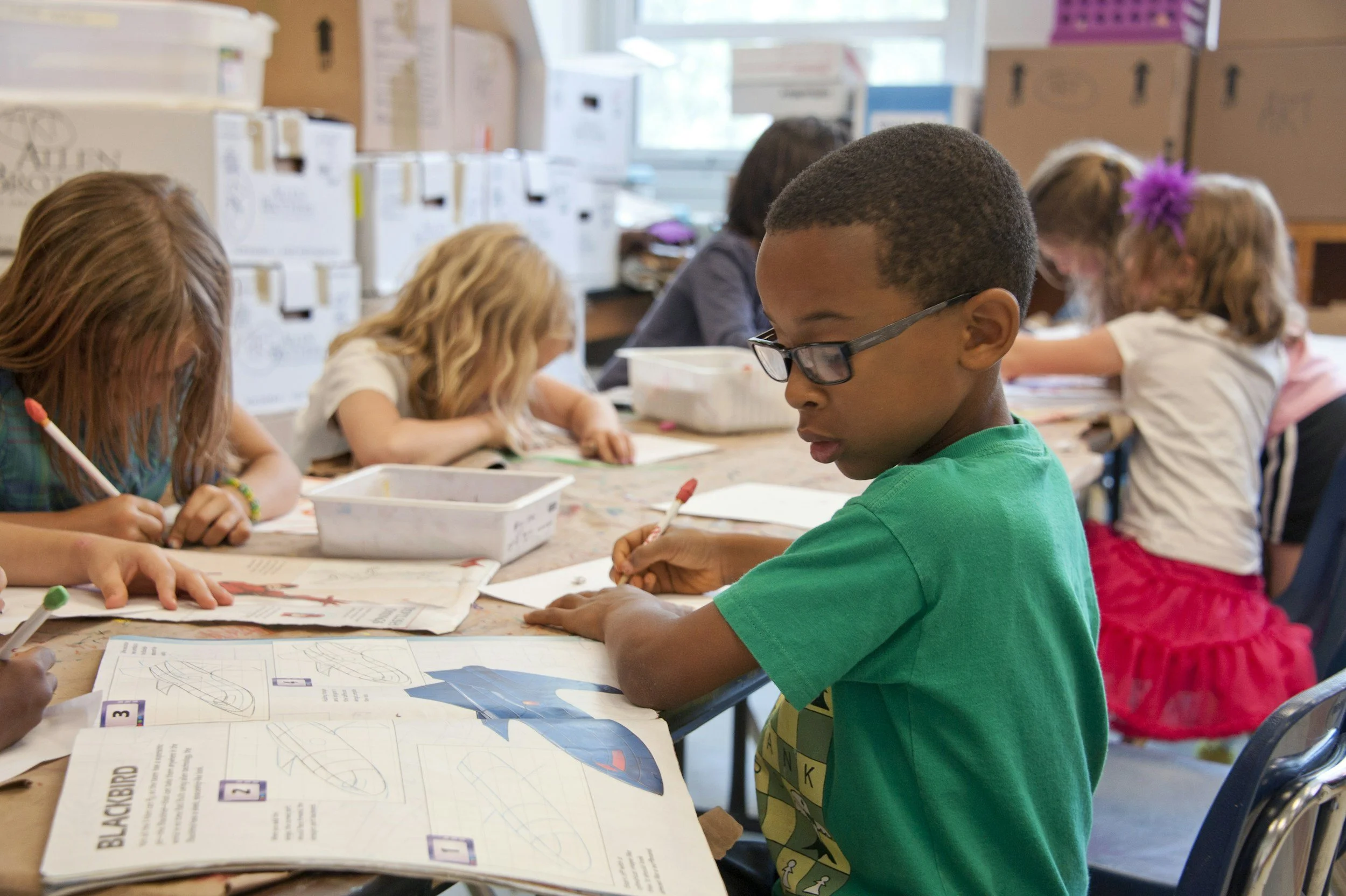
In a core classroom, there is not always the level of technology to support the type of artifact creation afforded to CTE classes; however, with the advent of AI tools and platforms, opportunities to creatively engage in technology-based creation based on classroom content have not only improved but exploded. For example, NotebookLM by Google can create an audio overview in which their writing is summarized and turned into an interactive audio podcast. This is a powerful way to externalize their understanding and create a product from a static piece of writing. There are also a number of free tools that will assist in high-level technology integration. Digital assessment tools provide massive opportunities for feedback regarding writing quality, argument development, and comprehension. Reflection activities may ask students to analyze reading or problem-solving strategies, evaluate growth, or identify changes in understanding over time, which can be turned into visual artifacts on any platform or into opportunities for purposeful talk among students. Through this process, durable instruction becomes a cycle of reading, solving equations or problems, researching, artifact creation, revision, and reflection that includes the entire class.
Fine Arts

Fine arts education is often documented through developmental artifacts that reveal growth over time. Because of this, artifacts serve not only as products of artistic expression but also as records of creative thinking. There is a wonderful opportunity for the students themselves to become the artifact in Choir or Band. Visual Arts also allows the externalization of the fruits of encoding and retention through paintings, sketches, sculpture, or mixed-media pieces. Installations and exhibits are also possible. This means that feedback and metacognative analysis can be varied and personal and may be obtained from instructors, peers, collections, or public audiences. Reflection activities encourage students to evaluate artistic decisions, creative processes, and technical growth, and they mirror the requirements for AP examinations, Scholastic competitions, and portfolio submissions for scholarships.
Conclusion
The broader significance of HABL lies in its potential to move educational technology discussions beyond the typical traditional-versus-digital debate. Hybrid Artifact creation contributes directly to student learning. These components can function together to support encoding, visible thinking, retention, and reflection.
As technologies such as artificial intelligence become increasingly common, educators will continue to face questions about the role of technology in learning. The HABL framework maintains that the central question is not whether a technology is new or sophisticated, but whether it meaningfully contributes to artifact creation, knowledge construction, retention, and metacognitive awareness, which places learning processes at the center of technology integration. When physical and digital artifacts are intentionally connected through the HABL framework, technology becomes more than a crutch. It becomes part of a learning ecosystem supporting deeper understanding and improved outcomes.
Disclosure statement:
The author reports there are no competing interests to declare.
Declaration of generative AI use:
The author reports that generative AI was used to create the figures in this manuscript based on the author’s text.
References
Brunsman, B., & McEntarffer, R. (2023, February 23). Memorable feedback: Lessons from cognitive psychology in encoding. The Learning Scientists. https://www.learningscientists.org/blog/2023/2/23-1
Craik, F. I. M., & Lockhart, R. S. (1972). Levels of processing: A framework for memory research. Journal of Verbal Learning and Verbal Behavior, 11(6), 671–684.
Craik, F. I. M. (2002). Levels of processing: Past, present... and future? Memory, 10(5–6), 305–318.
Diemand-Yauman, C., Oppenheimer, D. M., & Vaughan, E. B. (2011). Fortune favors the bold (and the italicized): Effects of disfluency on educational outcomes. Cognition, 118, 111–115
Fiorella, L., & Mayer, R. E. (2015). Learning as a generative activity: Eight learning strategies that promote understanding. Cambridge University Press.
Hughes, J. E., & Roblyer, M. D. (2022). Integrating Educational Technology Into Teaching: Transforming Learning Across Disciplines. Pearson.
Koehler, M. J., Mishra, P., Akcaoglu, M., & Rosenberg, J. M. (2013). The technological pedagogical content knowledge framework for teachers and teacher educators. In M. Herring, M. J. Koehler, & P. Mishra (Eds.), ICT integrated teacher education models (pp. 1–8). Commonwealth Educational Media Centre for Asia (CEMCA).
Mishra, P., & Koehler, M. J. (2008). Introducing technological pedagogical content knowledge. In AACTE Committee on Innovation and Technology (Ed.), Handbook of technological pedagogical content knowledge (TPCK) for educators (pp. 3–29). Routledge.
Mueller, P. A., & Oppenheimer, D. M. (2014). The pen is mightier than the keyboard: Advantages of longhand over laptop note taking. Psychological Science, 25(6), 1159–1168. https://doi.org/10.1177/0956797614524581
Richland, L. E., Bjork, R. A., Finley, J. R., & Linn, M. C. (2005). Linking cognitive science to education: Generation and interleaving effects. In B. G. Bara, L. Barsalou, & M. Bucciarelli (Eds.), Proceedings of the Twenty-Seventh Annual Conference of the Cognitive Science Society (pp.1850–1855). Mahwah, NJ: Erlbaum.
Tezer, M. (2024). Cognition and metacognition in education. In M. Tezer (Ed.), Metacognition in learning: New perspectives (Chap. 1). IntechOpen.https://doi.org/10.5772/intechopen.114857
